

New York City is home to iconic architectural landmarks such as the Empire State Building, which stands at 1,454 feet with observation decks on the 86th and 102nd floors, and the Statue of Liberty, a symbol of freedom since 1886. One World Trade Center, the tallest building in the Western Hemisphere at 1,776 feet, and the Art Deco Chrysler Building, completed in 1930, are must-see sites. The Flatiron Building, known for its unique triangular shape, and the Brooklyn Bridge, completed in 1883, showcase engineering marvels.
Let’s explore some of these landmarks.
1. Empire State Building
The Empire State Building, completed in 1931, stands at 1,454 feet, including its antenna, and was the tallest building in the world until 1970. It features observation decks on the 86th and 102nd floors, offering panoramic views of New York City. The building has 102 floors and is located at 350 Fifth Avenue. It was constructed in just 13 months, a record time for such a large project at the time. The Empire State Building is visited by around 4 million people annually
2. Statue of Liberty

The Statue of Liberty, dedicated in 1886 and a gift from France, stands at 305 feet tall, including its pedestal and torch. Located on Liberty Island in New York Harbor, it was designed by Frédéric Auguste Bartholdi with a steel framework by Gustave Eiffel. The statue symbolizes freedom and democracy. Visitors can access the pedestal and crown, offering panoramic views of the harbor and city skyline. It attracts approximately 4.5 million visitors annually, making it one of the world’s most iconic landmarks.
3. One World Trade Center

One World Trade Center, completed in 2013, is the tallest building in the Western Hemisphere, standing at 1,776 feet, including its spire. Located in Lower Manhattan, it was built on the site of the original World Trade Center, which was destroyed on September 11, 2001. The building features 104 floors, with the One World Observatory occupying floors 100-102, offering 360-degree views of New York City. The structure’s design emphasizes sustainability and safety, incorporating advanced engineering features. One World Trade Center attracts millions of visitors each year and serves as a significant symbol of resilience and rebuilding.
4. Chrysler Building

The Chrysler Building, completed in 1930, stands at 1,046 feet and was the world’s tallest building for 11 months until the completion of the Empire State Building. Located at 405 Lexington Avenue in Midtown Manhattan, it is an iconic example of Art Deco architecture, designed by architect William Van Alen. The building features a distinctive terraced crown and ornate eagles modeled after Chrysler automobile hood ornaments.
5. Flatiron Building
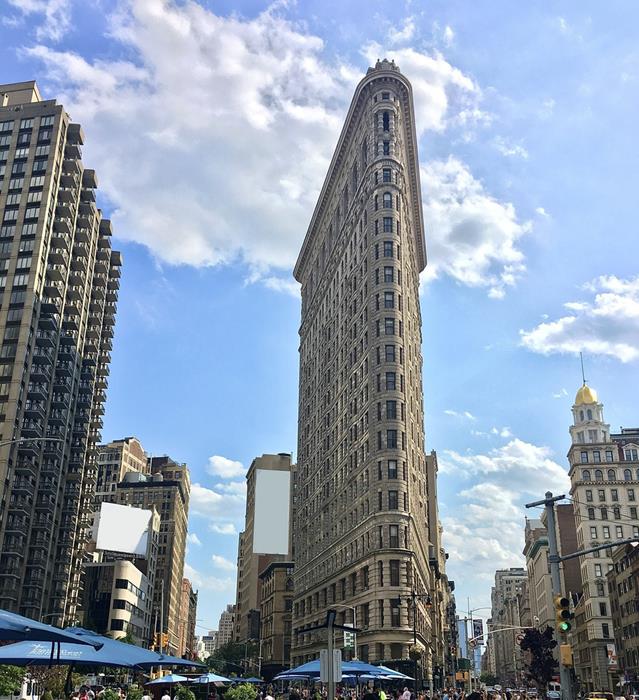
The Flatiron Building, completed in 1902, is located at 175 Fifth Avenue in Manhattan. Standing at 285 feet tall, it is renowned for its distinctive triangular shape, designed by architect Daniel Burnham. The building’s unique design allowed it to fit into the triangular plot created by the intersection of Fifth Avenue and Broadway. As one of the first skyscrapers in New York City, the Flatiron Building is an iconic piece of Beaux-Arts architecture and remains a prominent landmark in the city’s skyline.
6. Brooklyn Bridge

The Brooklyn Bridge, completed in 1883, spans 1,595 feet across the East River, connecting Manhattan and Brooklyn. Designed by John A. Roebling, it was the longest suspension bridge in the world at the time of its completion. The bridge features a unique hybrid cable-stayed/suspension design and was one of the first to use steel wire for its cables. It has a pedestrian walkway above the traffic lanes, offering panoramic views of the New York City skyline and the East River. The Brooklyn Bridge remains a vital transportation link and a historic architectural marvel, attracting millions of visitors each year.
7. Grand Central Terminal

Grand Central Terminal, opened in 1913, is located at 89 East 42nd Street in Midtown Manhattan. Covering 48 acres, it features 44 platforms, more than any other railroad station in the world. Designed in the Beaux-Arts style by the firms Reed and Stem and Warren and Wetmore, the terminal is renowned for its opulent main concourse, featuring a 125-foot-high ceiling adorned with a mural of constellations. Grand Central serves over 750,000 visitors daily, including commuters and tourists, and remains a crucial transportation hub in New York City.
8. Rockefeller Center

Rockefeller Center, completed in 1939, is a large complex of 19 commercial buildings covering 22 acres between 48th and 51st Streets in Midtown Manhattan. It was developed by the Rockefeller family and designed in the Art Deco style. The centerpiece is the 30 Rockefeller Plaza, standing at 850 feet with 70 floors. The complex is famous for its annual Christmas tree lighting, the iconic ice-skating rink, and the Top of the Rock observation deck, which offers expansive views of New York City.
9. St. Patrick’s Cathedral

St. Patrick’s Cathedral, located on Fifth Avenue between 50th and 51st Streets in Manhattan, was completed in 1878. It is an iconic example of Gothic Revival architecture, designed by James Renwick Jr. The cathedral spans 332 feet in length and 174 feet in width, with twin spires reaching 330 feet high. St. Patrick’s can accommodate approximately 2,400 people and serves as the seat of the Archbishop of New York.
10. The Solomon R. Guggenheim Museum
The Solomon R. Guggenheim Museum, located at 1071 Fifth Avenue in Manhattan, was designed by architect Frank Lloyd Wright and opened in 1959. The museum is renowned for its unique spiral design, which allows visitors to view art on a continuous ramp that ascends from the ground floor to the skylight at the top. The building is 96 feet high and has a diameter of 119 feet. The Guggenheim houses an extensive collection of modern and contemporary art and attracts over a million visitors annually, making it one of New York City’s most iconic cultural institutions.
Conclusion
Visiting New York City’s most famous architectural landmarks offers a glimpse into its rich history and innovative spirit. The Empire State Building, the Statue of Liberty, One World Trade Center, and the Guggenheim Museum each showcase the city’s grandeur and cultural significance. These landmarks highlight NYC’s architectural excellence and provide a deeper understanding of its past and present.